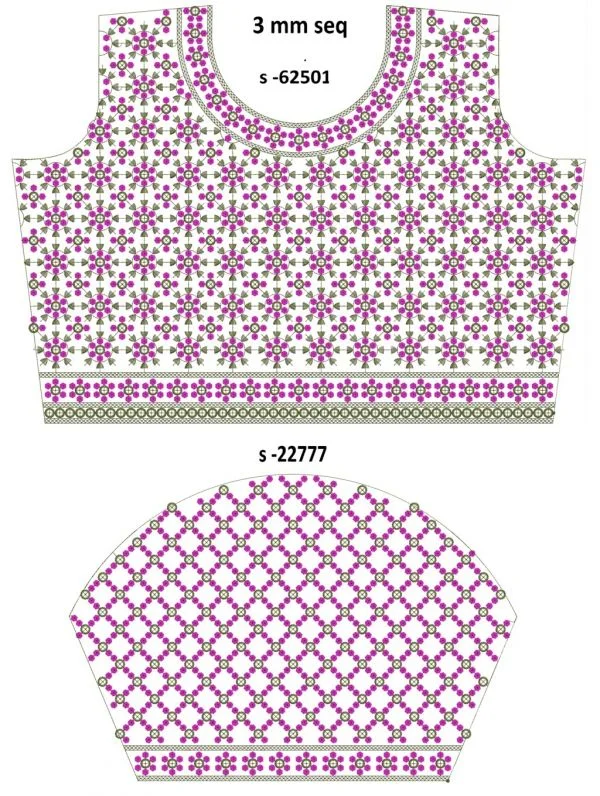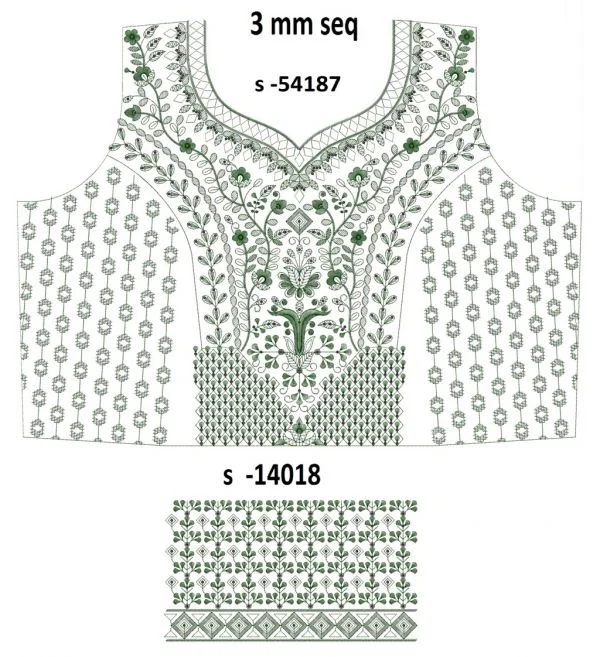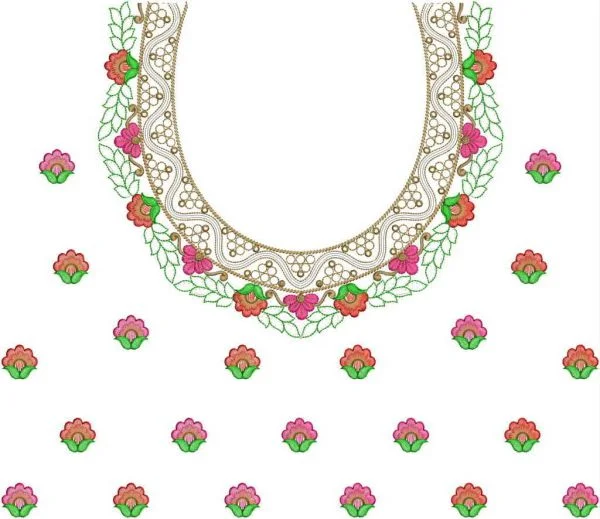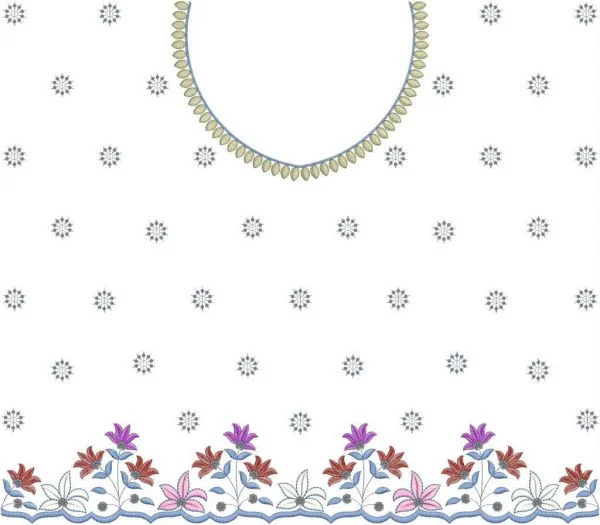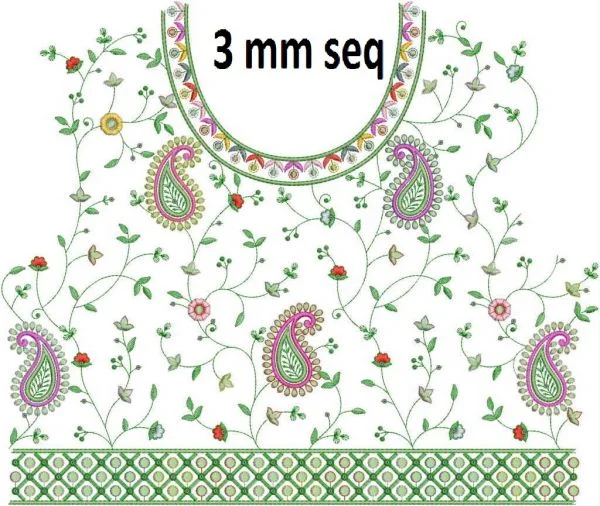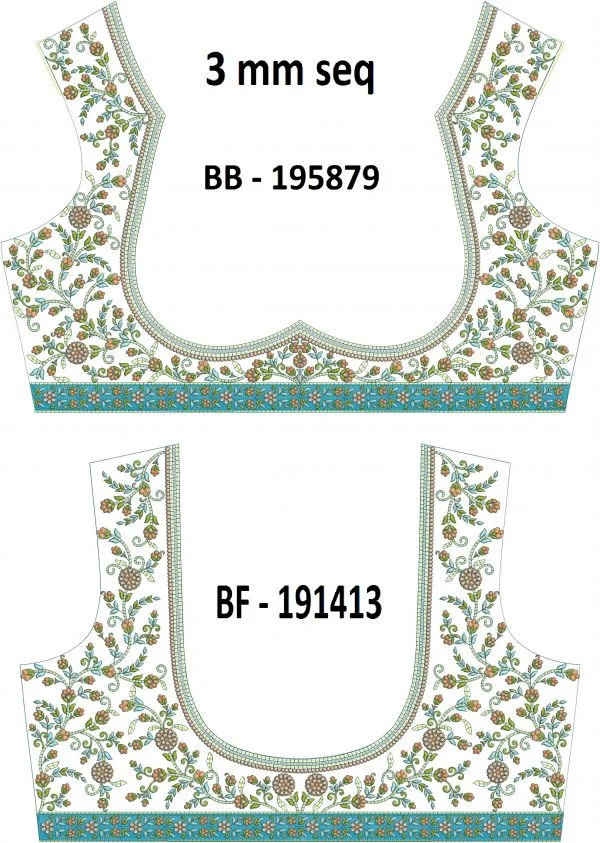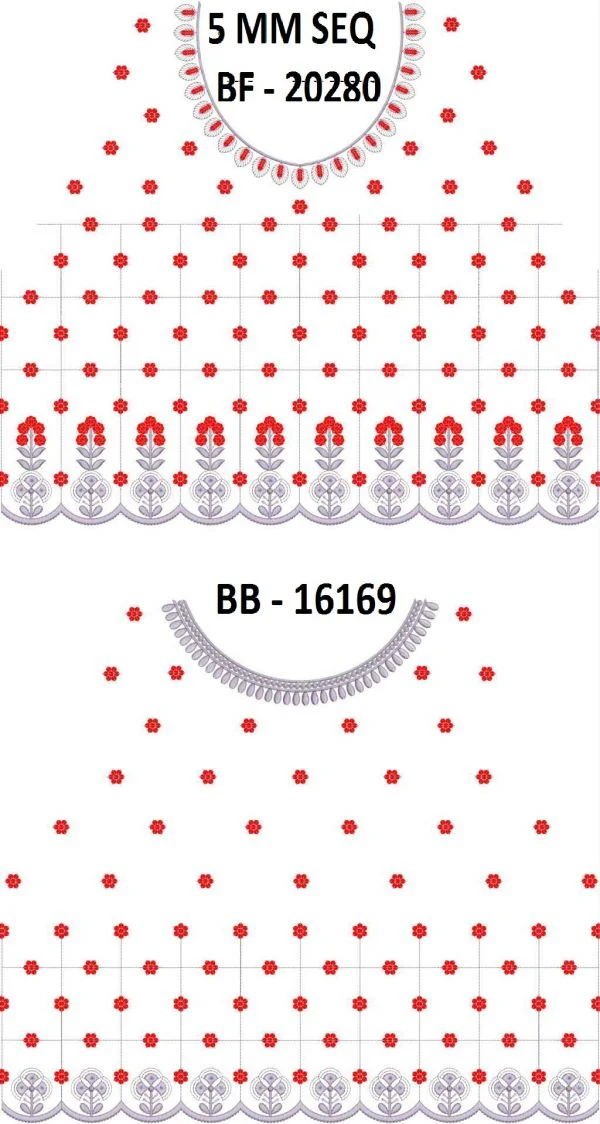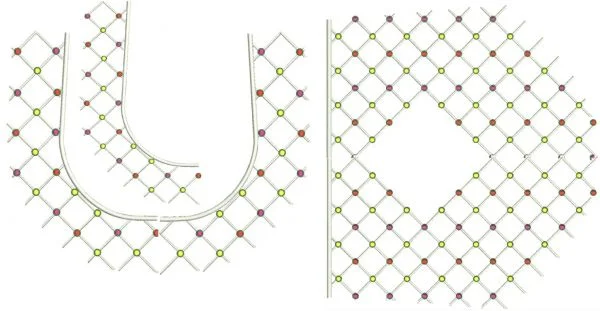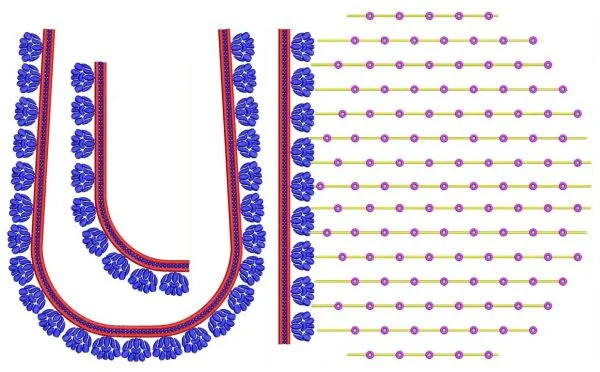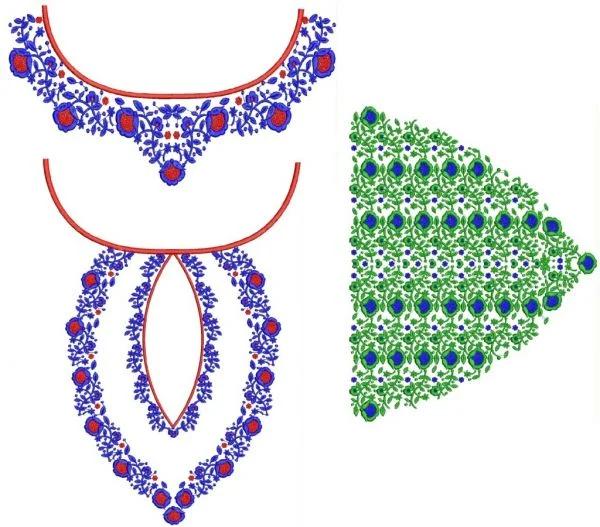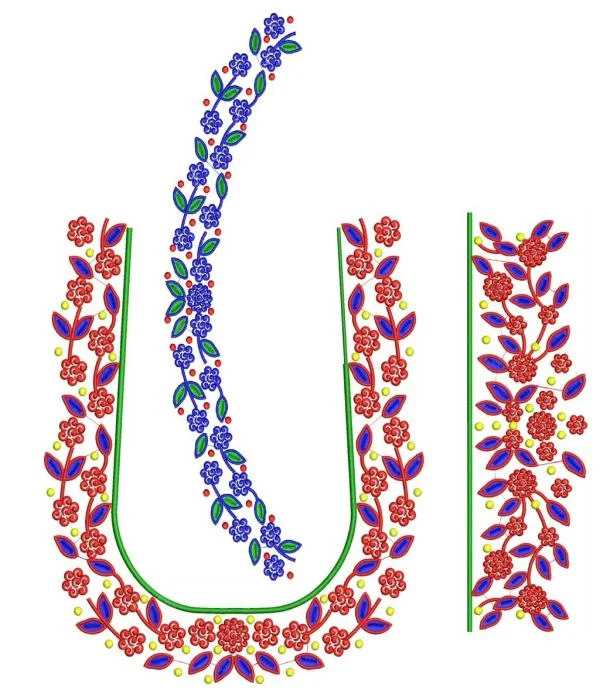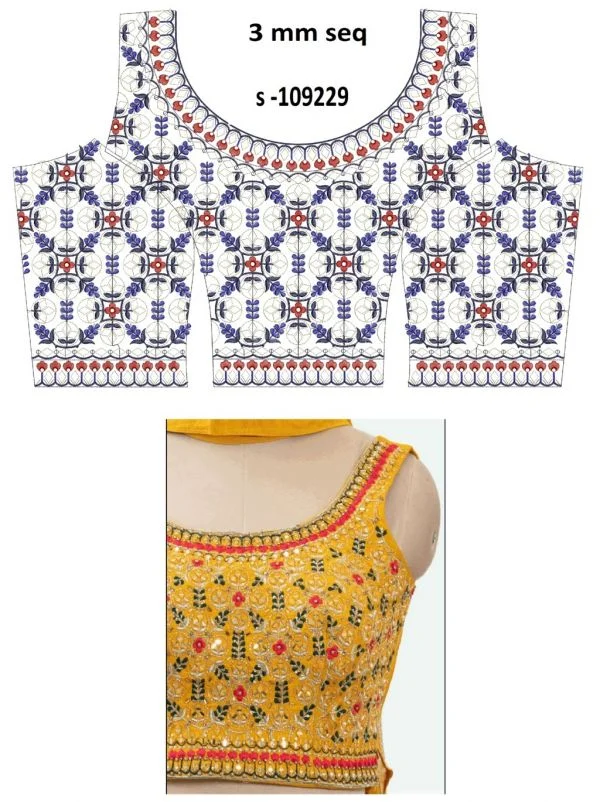
EDT-BLOUSE-0001
12,000 sts
90×80 mm
Download production-tested Blouse Embroidery Designs computer embroidery machine designs in Wilcom .EMB, Tajima .DST, Brother .PES, and Janome .JEF. Stitch-verified with high density at competitive wholesale rates.
Blouse embroidery is among the most demanding sectors of Indian ethnic garment production, requiring millimeter precision across back-neck drops, front-neck curves, and matching sleeve borders. Each design in our blouse collection is punched using licensed Wilcom ES e4.5 with dedicated object contours, preserving native wireframes for seamless resizing within ±20% without distorting stitch density.
Standard satin borders are punched with a column density of 0.38 mm to 0.42 mm. Due to the high elasticity of bridal raw silk, Bangalore silk, and georgette, an intentional pull-compensation of 0.35 mm is baked into the satin columns, ensuring razor-sharp border outlines that do not buckle or separate during multi-needle stitching.
For standard 40wt Viscose Rayon and Trilobal Polyester threads, operate multi-head Tajima, Barudan, or SWF machines between 750 and 850 SPM. When running metallic Zari or Kasab threads on Maggam-style borders, reduce machine speed to 650 SPM and calibrate top tension to 95–105 gf with DBxK5 #11/75 or #14/90 needles.
We advise 2 plies of 50 GSM non-woven tear-away backing for firm woven silks. For lightweight net or chiffon blouse sleeves, pair one layer of fusible mesh cut-away with a 25-micron water-soluble topping (solvy) to hold intricate micro-sequin and thread loops upright.
All packages include Wilcom .EMB master files alongside machine-ready .DST, .PES, and .JEF formats. Full multi-format licensing covers commercial production and custom boutique scaling.