
Masterpiece Machine & Computer Embroidery Designs
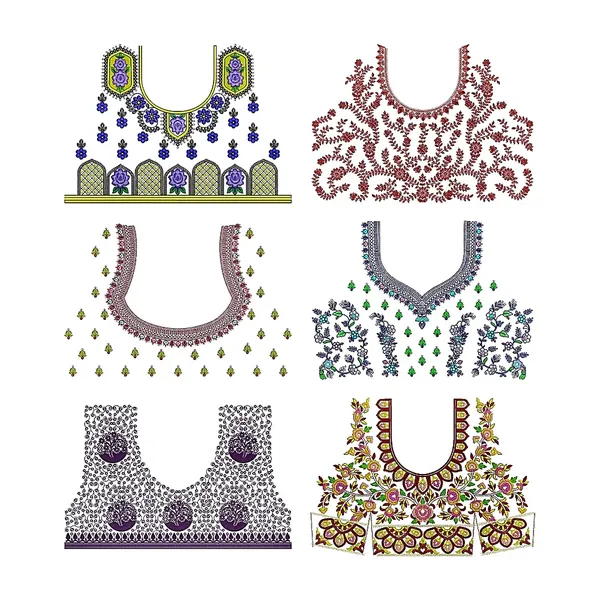
Precision-digitized Wilcom .EMB, Tajima .DST, Brother .PES & Janome .JEF punch files. Heavy bridal lehengas, designer blouse patterns, and intricate neckline galas engineered for flawless tension and zero thread breaks.
 0 Thread Breaks Guarantee
Royal Bridal Blouse & Gala Suite
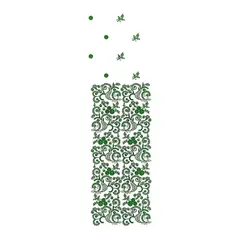
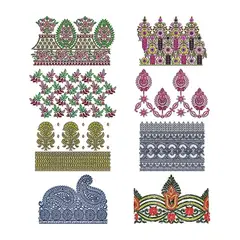
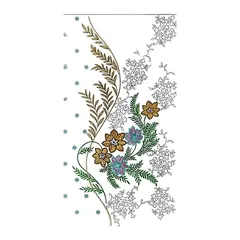

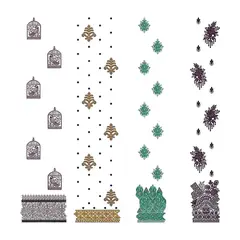
One Purchase, Every Machine Ecosystem
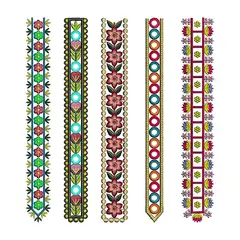
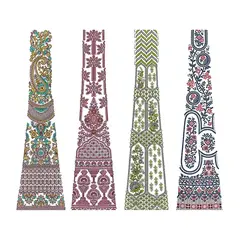
Every design package includes 6 genuine machine files calibrated for needle sequencing, trims, and balanced tension.
The Commercial Embroidery Punching Manual: Standards, Formats & Tension
Computerized machine embroidery requires strict calibration between digital stitch coordinates, fabric elasticity, needle friction, and bobbin tension. Below is our master studio reference for commercial factory operators and boutique designers.
.EMB vs .DST: Master File Architecture
Wilcom .EMB is an object-based vector file retaining wireframe contours, fill angles, and stitch density formulas. When scaled in Wilcom, stitches automatically recalculate. Tajima .DST is compiled machine binary code (step & stop commands). Always keep the .EMB file as your master production asset.
Read File Format Guide →Stitch Density & Push-Pull Compensation
As machine needles penetrate fabric, thread tension pulls columns inward across the stitch direction by 0.35–0.45 mm while pushing outward along the ends. Our punchers build precise pull-compensation into all satin borders to prevent white fabric gaps between outlines and tatami fills.
Learn Density Settings →Zari & Metallic Thread Machine Calibration
Metallic Kasab and Zari yarns have higher surface friction and lower tensile strength than viscose rayon. Run multi-head Tajima and Barudan machines at 650–750 SPM (instead of 950 SPM), loosen upper tension to 95–105 gf, and use DBxK5 #14/90 needles with enlarged eyes.
Zari Tension Calibration →Fabric Backing & Stabilizer Selection
For heavy bridal velvet and silk lehengas, use 2 plies of 50 GSM non-woven tear-away backing paired with a 25-micron water-soluble film (solvy) on top to prevent intricate satin stitches from sinking into fabric pile. For stretchy georgette, use fusible cutaway stabilizer.
Stabilizer Selection Matrix →Frequently Asked Questions & Technical Specifications
What file formats are included with each embroidery design download?
Every download package contains 6 production formats: Wilcom .EMB (master editable object file), Tajima .DST (universal commercial format), Brother .PES, Janome .JEF, Melco .EXP, and Husqvarna .VP3, plus vector contour preview files.
Are these embroidery designs verified for commercial garment manufacturing?
Yes, 100% of our designs are digitized using licensed Wilcom ES e4.5 and test-stitched on commercial multi-head Tajima and Barudan machines before cataloging to guarantee optimal push-pull compensation and zero thread breakage.
Can I resize an embroidery design without losing stitch density?
With the included Wilcom .EMB file, you can resize up to ±20% and Wilcom will automatically recalculate stitch counts, density, and underlay. For pre-compiled .DST or .PES files, our technical desk (@embdesign71 on Telegram) provides free resizing support within 2 hours.
What needle and thread tension are recommended for heavy bridal embroidery?
For standard 40wt Viscose Rayon thread, use DBxK5 #11/75 needles with 110-120 gf top tension. For metallic Zari/Kasab threads, use #14/90 embroidery needles with reduced top tension (90-100 gf) to prevent thread shredding.
How does digital file delivery and customer support work?
Files are available for immediate download upon payment and also backed up to your Telegram account (@embdesign71). Our technical support desk is available Monday to Saturday, 9 AM to 9 PM IST at embdesign71@gmail.com and Telegram @embdesign71.